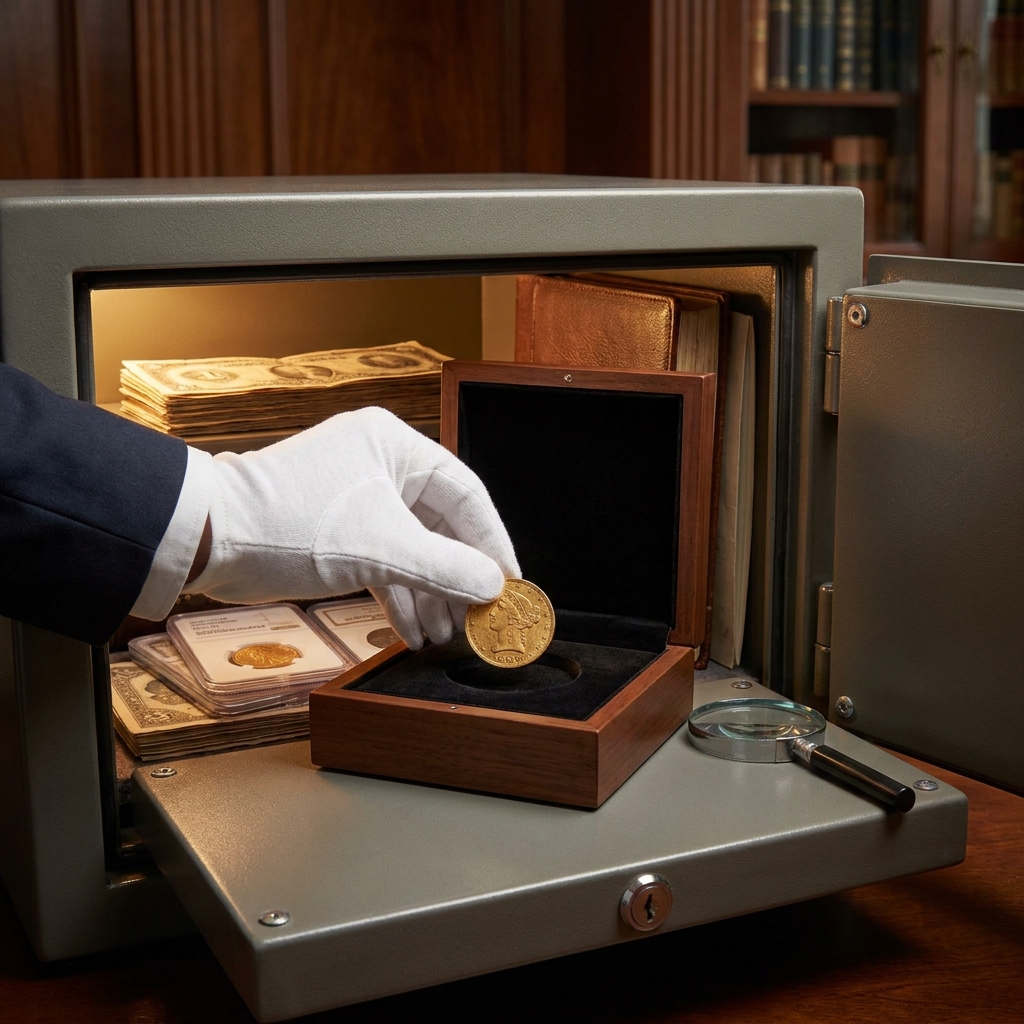
When Passion for Financial History Meets a Modern Wealth Plan
Collecting vintage financial documents, coins, stamps, and other historical finance memorabilia can be far more than a nostalgic hobby. These items capture moments where policy, markets, and human behavior intersected in tangible form. For affluent families, they can become conversation pieces that quietly reinforce long-term thinking and stewardship. At the same time, they may offer niche diversification benefits when treated with the same discipline as any other asset. The opportunity lies in blending emotional value with rational strategy, so the collection supports your broader financial goals.
From Keepsakes to Capital Allocation: Defining the Role of a Collection
The first step is deciding whether your financial memorabilia will serve primarily as a passion project, a potential investment sleeve, or a blend of both. A collection positioned only as a speculative investment can lead to rushed decisions, while one treated only as sentimental may ignore meaningful financial implications. Clarifying the role helps your advisor determine whether to categorize items as personal property, a dedicated alternative asset bucket, or part of a larger legacy strategy. Many families choose to view these holdings as “satellite” assets that complement, but never replace, a disciplined core portfolio. This mindset keeps expectations realistic while allowing room for the joy of discovery.
It is also important to recognize that these assets are typically illiquid and may have wide bid-ask spreads, especially for niche items. Because of that, your financial plan should assume that converting them to cash quickly might require accepting a discount. This reality makes collectibles more appropriate for long-term horizons or legacy planning than for short-term goals. By aligning the collection with objectives like educating future generations, commemorating a family business, or supporting philanthropy, you reduce pressure to sell at inopportune times. That alignment also gives your advisory team a clear framework for decision-making over decades.
Choosing Your Lane: Documents, Coins, Stamps, and Financial Ephemera
The world of financial memorabilia is broad, so focus is crucial for both enjoyment and value preservation. Vintage financial documents might include historic stock certificates, bond certificates, or early insurance policies that reflect milestones in industry and regulation. Coins and currency often attract collectors who appreciate design, rarity, and the story behind particular mints, denominations, or issuing authorities. Stamps that celebrate economic events, trade routes, or international commerce can bridge philately and financial history in a focused way. Other ephemera, such as early bank ledgers, prospectuses, or brokerage advertisements, can round out a theme while remaining relatively accessible in price.
Choosing a lane does not mean never branching out, but it does encourage intentionality. You might decide to specialize by era, such as early central banking; by geography, such as the evolution of a country’s currency; or by theme, such as securities from pioneering technology companies. Each path offers different liquidity profiles, specialist communities, and research resources, which your advisor can help you weigh against your risk tolerance. Narrowing the scope also simplifies valuation discussions and insurance coverage, because the collection becomes easier to describe and document. Over time, a well-defined theme can itself enhance perceived value, as buyers increasingly appreciate curated stories rather than scattered one-off pieces.
Due Diligence: Authenticity, Provenance, and Pricing Discipline
Authenticity is the foundation of any serious collection with financial planning implications. Before significant purchases, your advisory team may suggest working with recognized dealers, auction houses, or third-party grading services that specialize in your chosen niche. Provenance—the documented history of ownership and origin—can materially influence value, especially for items linked to notable institutions or economic events. A clear paper trail, including invoices, certificates, and expert opinions, supports both eventual resale and smooth estate administration. Treating each acquisition like a small private investment, with supporting documentation, aligns the collection with the standards used elsewhere in your portfolio.
Pricing discipline is equally important, particularly when enthusiasm is high and supply is limited. Your financial plan should outline a rough budget for acquisitions each year and define thresholds that require additional review. This prevents emotional overspending and keeps the collection’s share of your net worth within agreed limits. Many collectors benefit from simple decision rules, such as favoring quality over quantity or avoiding impulse purchases at unfamiliar venues. By bringing the same rigor you apply to securities selection, you reduce regret risk and increase the likelihood that the collection remains a source of pride rather than financial stress.
Protecting Value: Storage, Insurance, and Recordkeeping
Once acquired, the collection’s risk profile shifts from market risk to physical risk, making protection a central planning concern. Sensitive materials like old paper and currency are vulnerable to light, humidity, and temperature fluctuations, so appropriate archival storage and, in many cases, a safe or bank vault are prudent. Your wealth manager can coordinate with an insurance professional to evaluate whether a dedicated rider, scheduled personal property coverage, or a separate collectibles policy is appropriate. Policy terms often depend on factors such as appraised value, security measures, and whether items are displayed, transported, or exhibited. Without this review, a sudden loss could be financially and emotionally devastating.
Equally important is a thorough digital inventory that complements physical safeguards. A well-organized catalog typically includes photographs, purchase dates, sources, descriptions, grades or condition notes, and any associated documentation. This information is invaluable for insurance claims, estate planning, and potential sales, giving heirs and professionals a clear starting point. Many families store this data in secure, shared vaults alongside wills, trusts, and account information, ensuring it is accessible when needed. As the collection evolves, periodic reviews with your advisor help maintain accurate values and prevent coverage gaps.
Weaving Collectibles into Your Ongoing Financial Plan
To integrate financial memorabilia into your wealth strategy, advisors often begin by estimating a reasonable range of potential values rather than a single precise figure. This range can be updated periodically, just as you would review real estate or private investments in a net worth statement. From there, your plan can assign the collection to a specific allocation category, such as alternatives or personal-use assets, recognizing its unique liquidity and volatility characteristics. Cash flow projections can also incorporate anticipated acquisition spending and potential sale scenarios, allowing you to see how the hobby interacts with retirement, education, or business goals. This holistic view turns an isolated passion into a clearly mapped component of your overall financial picture.
Risk management remains central throughout this process. Because values can be cyclical and market depth may be limited, your advisor may encourage conservative assumptions for planning purposes. That could mean modeling the collection at a discount to recent appraisals or excluding it entirely from calculations tied to essential living expenses. At the same time, you may decide to earmark a portion of potential future sale proceeds for discretionary goals, such as travel or philanthropy. This balanced approach acknowledges both the uncertainty and the upside without letting either dominate your decisions.
Legacy, Storytelling, and Philanthropic Opportunities
Financial memorabilia collections carry stories that can outlast their owners, which makes legacy planning especially meaningful. Through wills and trusts, you can specify whether items should be sold, divided among heirs, or maintained as a cohesive collection. Clear instructions help prevent conflicts, especially when some family members value the narrative more than the monetary worth. Advisors can also facilitate conversations about which pieces have special emotional significance, so beneficiaries understand why certain items were earmarked for them. When family members see the collection as part of a broader legacy, they are more likely to preserve both its financial and historical value.
There is also a philanthropic dimension that aligns well with broader wealth planning strategies. Certain collections may be strong candidates for donation to museums, universities, or cultural institutions focused on economic history or business education. Structured gifts can potentially be integrated into charitable planning, alongside donor-advised funds or private foundations, subject to appropriate legal and tax guidance. In some cases, displaying selected items in public spaces can amplify your family’s story of entrepreneurship, stewardship, or community contribution. By treating these decisions with the same care as any other legacy strategy, you ensure that your passion for financial history continues to create value far beyond your own balance sheet.
Working with Advisors and Specialists to Steward Your Collection
Finally, collaboration is key to making sure your collection enhances, rather than complicates, your overall wealth plan. Your financial advisor can coordinate with appraisers, attorneys, insurance specialists, and, when appropriate, reputable dealers or auction professionals. Together, this team can help you set acquisition guidelines, schedule periodic valuations, and document succession plans. They can also flag potential tax and reporting considerations around large purchases, sales, or charitable transfers. By elevating your collection to the same level of oversight as other major assets, you protect both its financial contribution and its role in your personal story.
Over time, this coordinated approach allows your collection of vintage financial documents, coins, stamps, and related memorabilia to mature alongside your wealth. What begins as a personal curiosity can evolve into a curated archive that reflects generations of decision-making and values. With structure and intention, the collection becomes a teaching tool, a potential source of capital, and a bridge between past and future. In that sense, these artifacts do more than commemorate old markets and currencies. They become living components of a thoughtful, well-managed financial life.